
Key takeaways
- Notice, do not brainstorm: The best startup ideas emerge from friction spotted during real work at the edge of a changing field, not from ideation sessions. Paul Graham calls these "organic" ideas and argues the most successful startups almost all begin this way.
- Five sourcing channels produce the strongest signals in 2026: Niche community complaints (Reddit, Discord), freelancer marketplaces (recurring paid tasks), one-star app reviews of incumbents, regulatory and platform-shift calendars, and cross-domain side projects.
- Demand must be verified before the idea earns any time: The #1 cause of startup failure is building something nobody wants, appearing in 35 to 42 percent of post-mortems according to CB Insights' ongoing analysis. Checking sources before building is the lowest-cost way to avoid that.
- An idea without validation is just a hypothesis: Finding an idea and validating it are sequential steps. A free sourced scan against 60+ live data sources can surface market size, competitor density, and risk signals in about 60 seconds.
CB Insights has analyzed hundreds of startup post-mortems, and the #1 reason startups die keeps showing up in 35 to 42 percent of cases: they built something nobody wanted (Startups.com / CB Insights). The wrong idea, plain and simple. If you want to find startup ideas that survive contact with reality, the fix is not a better brainstorming session.
The fix is a different process entirely, one that starts with noticing real friction instead of inventing clever solutions. I have been building Preuve AI for eight months now, and the single best decision I made was how I chose what to build, not the idea itself.

Will your idea survive the market?
Preuve AI runs 10 agents against live market data and links every claim to a source. Free analysis in 60 seconds.
Where do good startup ideas come from?
The foundational essay on this question is Paul Graham's "How to Get Startup Ideas", published in 2012 and still the most-cited piece on the subject. The core line is short:
"Live in the future, then build what's missing."
Graham's argument is that the verb you want is "notice," not "think up." An organic idea grows out of the founders' own experiences, not a brainstorming session. "The most successful startups almost all begin this way," he writes. Apple, Yahoo, Google, Facebook: none were supposed to be companies at first.
You put yourself at the edge of something changing fast, as a builder or a heavy user, and you start seeing friction other people are too far back to notice. Drew Houston forgot his USB stick and thought "I really need to make my files live online." Thousands of people forgot USB sticks that month, but only Houston, a programmer, was primed to see the pain as a product.

This is uncomfortable advice if you want a weekend recipe. Graham acknowledges that directly: "You may have expected recipes for coming up with startup ideas, and instead I'm telling you that the key is to have a mind that's prepared in the right way." It is still a recipe, just a slow one, a year at worst instead of a weekend.
Why does brainstorming startup ideas fail?
When you sit down and try to think up startup ideas, you get what Graham calls "sitcom" ideas. A sitcom idea is a startup concept that sounds plausible enough to fool you into working on it but solves a problem nobody actually has. "Imagine one of the characters on a TV show was starting a startup," he writes. "The writers would have to invent something for it to do. But coming up with good startup ideas is hard. It's not something you can do for the asking."
The trap is that sitcom ideas pass the friend test. Describe a social network for pet owners and your friends say "yeah, maybe." Sum those lukewarm nods across the population: zero users. What you want is a small group who would use your product even as a crappy version one from a startup they have never heard of. Graham calls that shape of demand a "well," narrow but deep.
Graham calls the second trap the "schlep filter": the tendency for founders to unconsciously avoid ideas involving tedious, real-world operational work. Stripe is his example. Thousands of programmers knew how painful payment processing was, but none saw it as a startup because dealing with payments looked like drudgery. The good ideas sit right there. Nobody picks them up because they look like work.
Skip weeks of manual research
Get complete market research, sourced proof, competitor map, and pricing data for your idea instantly.
How do you spot real demand before you build?
Graham's essay tells you why, not where. The question most founders need answered: where do I look, concretely, in 2026? I have found five sourcing channels that consistently produce strong demand signals.
Niche community complaints. Pick a vertical you understand (dentists, indie game developers, Airbnb hosts) and read the bottom 100 posts in their subreddit or Discord. Look for complaints that recur three or more times in different threads. A 74-upvote r/Startup_Ideas thread from April 2026 put it simply: "the forum approach is underrated, people complain so specifically on Reddit that you basically get free customer discovery."
Freelancer marketplaces. Fiverr, Upwork, and Contra are public databases of every task humans currently pay other humans to do. Categories with 500+ active gigs at $25+/hour where the task is 80% the same across customers are strong SaaS candidates. If freelancers themselves use software to do the work, you can sell to them too.
One-star app reviews. The App Store and Google Play surface structured complaints from real paying users. Search for the category leader in your space and sort by one-star reviews. The recurring pain points, not the one-off rants, are your feature roadmap and sometimes a standalone product.
Regulatory and platform-shift calendars. Every few years, a regulation or platform change forces a whole industry to adopt new tooling. GDPR created a compliance software category overnight. iOS 14 ATT reshaped ad-tech. The EU AI Act enforcement deadline hit in August 2025. The window is the 12 to 18 months after the shift becomes mandatory but before the tooling commoditizes.
Cross-domain side projects. Graham calls the clash of domains "a particularly fruitful source of ideas." If you know programming and start learning genetics, you are doubly likely to find good problems: the inhabitants of that domain haven't solved their problems with software yet, and you don't take their status quo for granted. The best idea-finding move for a CS major, Graham writes, might be a summer job in an unrelated field.
One filter I run every friction-log entry through: is there a buyer who already pays for a worse version of this (spreadsheets, consultants, manual labor)? Yes means a demand signal. "Nobody pays for this today but they should" usually means a sitcom idea. The exception is a forcing function, a regulation or platform shift that will create the buyer on a known date.

What are the best places to find startup ideas in 2026?
The channels above are timeless. What changes year to year is which frontiers are producing the most friction, and therefore the most organic ideas. In 2026, three frontiers stand out.
AI tooling for non-AI companies
The generative AI wave created a flood of horizontal tools (writing assistants, chatbots, image generators). Most of those categories are already oversaturated. The friction has moved downstream: non-AI companies that need to adopt AI but lack the internal expertise. Compliance documentation, AI-readiness audits, domain-specific fine-tuning pipelines. These are schlep-heavy, which means the schlep filter is protecting them from competition.
Vertical SaaS for industries that still run on paper
HVAC, pest control, roofing. These industries have money and problems, but most horizontal SaaS ignores them because the sales cycle is inconvenient and the TAM per vertical looks small, which is exactly what keeps competitors out. A founder who spends three months as a pest control dispatcher will see problems no generalist founder ever would, and the trade association distribution channel means you do not need a sales team to reach your first 50 customers.
Regulation-driven compliance
The pattern keeps repeating: a regulation creates a new category of required software. GDPR produced OneTrust; SOC 2 automation did the same for Vanta. The EU e-invoicing mandate is the current example, alongside AI governance rules and new US state privacy laws. The key is timing: the window opens when enforcement begins and closes when incumbents ship native features.
How do you know your startup idea is worth pursuing?
Finding an idea and validating it are sequential steps, and most founders skip the second or confuse it with the first. Noticing shared friction gets you an idea. You do not get a validated one until you can show, with sources, that a market exists, that buyers already pay for worse alternatives, and that competitors leave room for a new entrant.
I wrote a full guide on how to validate a startup idea without building anything. The short version: talk to 10 strangers who have the problem, map the competitors, and run a smoke test. If you want the sourced data step first, a free Reality Check scans 60+ live data sources and returns a viability score in about 60 seconds. It will not replace customer conversations, but it tells you whether the signals justify having them.
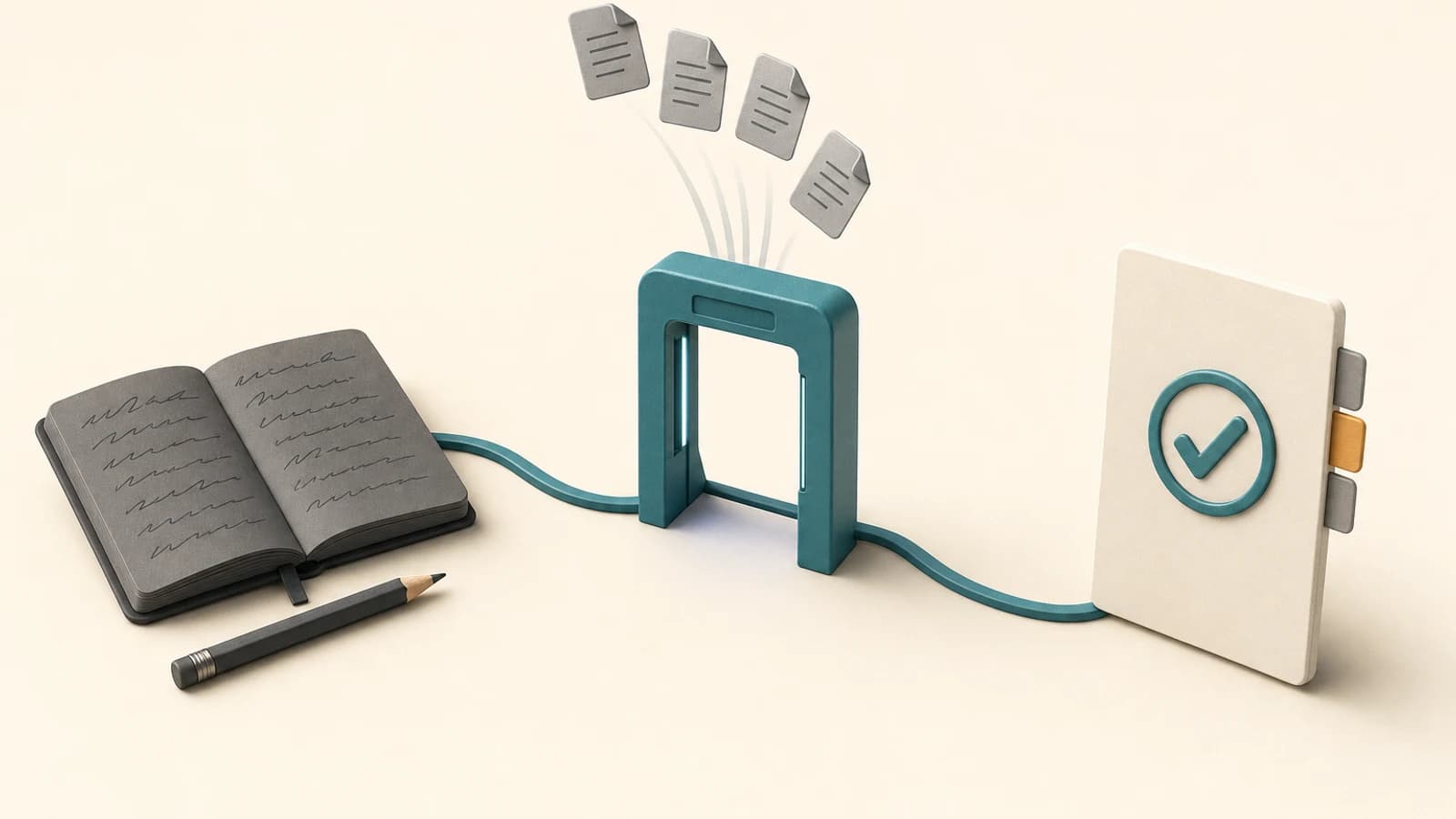
Based on anonymized data from 6,000+ ideas scanned through Preuve AI (July 2026 benchmark study), only 17.5% scored in the "go" range (70+). The most common outcome is "caution" (40-69). The data confirms what Graham argues: most ideas are not good enough. You are building a process, not betting on any one idea.
If your idea scores well, the next step is deeper validation: the full framework for evaluating whether your idea is good covers the qualitative side. A low score is the process doing its job, not you failing at it. Go back to your friction log and try the next entry.
The method in one line: stand at a frontier and log friction for two to four weeks. Keep only the entries with a paying buyer, then check the survivors against real market data before you write any code. You are not inventing anything. You are just paying closer attention to your own week than most people bother to.
FAQ
How did Paul Graham say to find startup ideas?
Paul Graham's core advice, from his 2012 essay "How to Get Startup Ideas," is to "live in the future, then build what's missing." He argues the verb should be "notice," not "think up." The best ideas grow organically from founders' own experiences at the leading edge of a changing field, not from brainstorming sessions. He calls ideas invented without that lived experience "sitcom" ideas, because they sound plausible but solve problems nobody actually has.
What is the best way to come up with a startup idea from scratch?
Place yourself at the frontier of a field that is changing fast, whether as a builder or a power user. Log every friction point you encounter for two to four weeks. Then filter the list for problems where a paying buyer already exists, not just an annoyed user. The ideas that survive both filters, real friction plus a real buyer, are worth validating with market data before you write any code.
Can you use AI to generate startup ideas?
AI tools can speed up research, surface adjacent markets, and help you explore regulatory shifts. But they cannot replace the lived experience that produces organic ideas, and they routinely hallucinate competitor names, market sizes, and pricing data. Use AI for breadth, then verify every claim that would change your decision against a primary source.
How long does it take to find a good startup idea?
Paul Graham suggests it can take up to a year of working at the leading edge before organic ideas start appearing. The shortcut is not speed but positioning: if you are already deep in a domain, you may already have friction-log entries worth investigating. Most founders who rush the idea stage end up building something nobody wants.
What are the biggest mistakes when looking for startup ideas?
Three patterns kill most idea searches. First, brainstorming in a vacuum instead of noticing problems during real work. Second, filtering too early by asking "Could this be a big company?" before confirming anyone wants it. Third, skipping validation entirely and jumping straight to building an MVP, which is how 35 to 42 percent of startups end up failing from no market need.
Cite this page
Last updated August 20, 2026
Forat, V. (2026, August 20). How to Find Startup Ideas That Are Actually Worth Building. Preuve AI. https://preuve.ai/blog/how-to-find-startup-ideas
Forat, Vincent. “How to Find Startup Ideas That Are Actually Worth Building.” Preuve AI, 20 Aug. 2026, preuve.ai/blog/how-to-find-startup-ideas.
Forat, Vincent. “How to Find Startup Ideas That Are Actually Worth Building.” Preuve AI. August 20, 2026. https://preuve.ai/blog/how-to-find-startup-ideas.
@misc{forat2026-how-to-find-startup-ideas,
  author = {Forat, Vincent},
  title = {{How to Find Startup Ideas That Are Actually Worth Building}},
  howpublished = {Preuve AI},
  year = {2026},
  month = aug,
  url = {https://preuve.ai/blog/how-to-find-startup-ideas},
  note = {Last updated August 20, 2026}
}
Vincent
5 years in B2B growth, building Preuve AI in public. 82% of ideas it scores aren't ready, the point is finding out in 10 minutes, not 3 months.
Follow on X →
Building is expensive. Validation is free.
Run your idea through 10 AI agents before you write a line of code. Every claim source-linked.